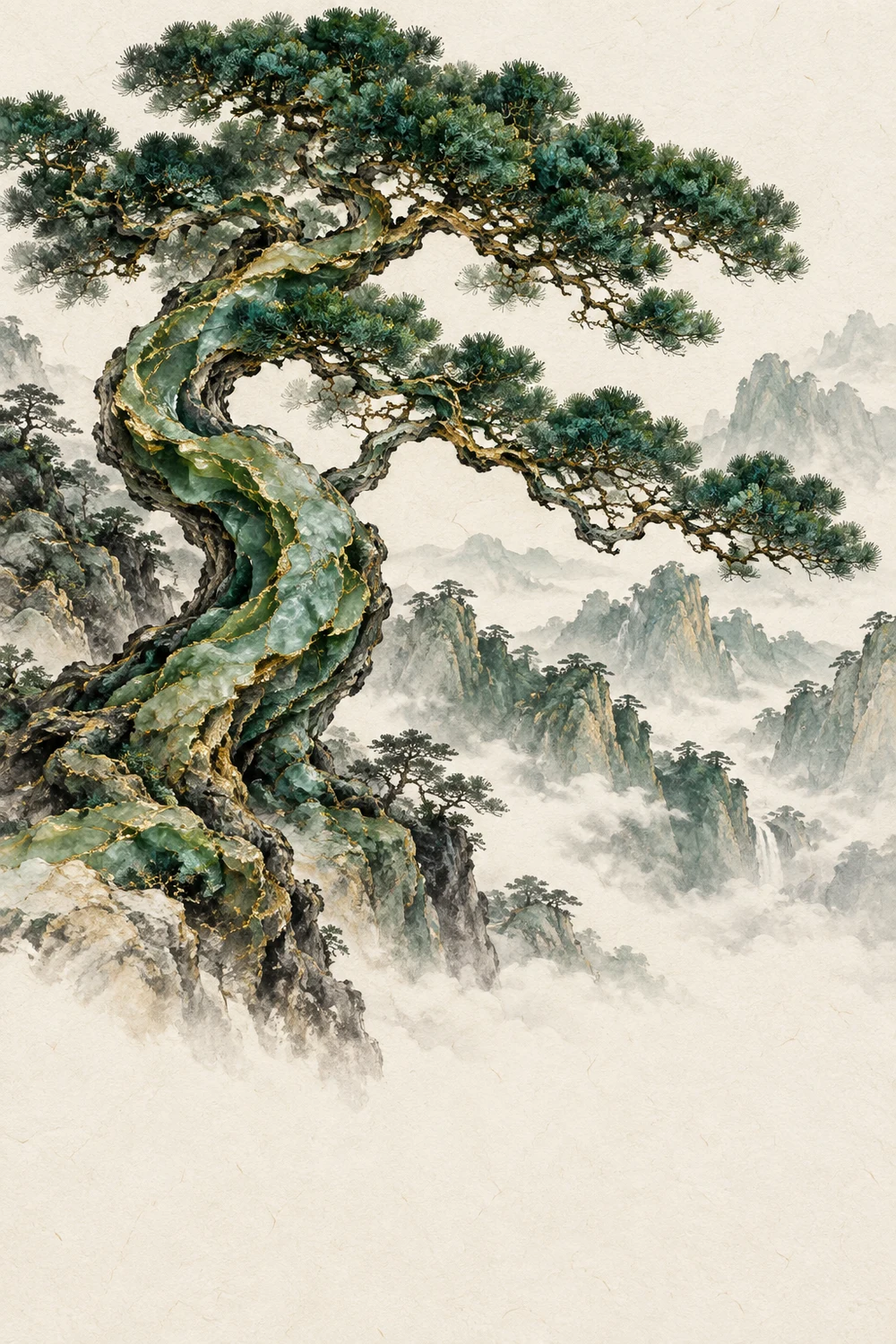
How to Hold a Tree Metaphor
If you know your Chinese zodiac animal, you know one character out of eight in a BaZi birth chart. The system pairs four Earthly Branches with four Heavenly Stems, and the stem of the day you were born is called the Day Master. One of those ten stems is 甲 Jiǎ, or Yang Wood. Classical imagery compares Jia Wood to a tall timber tree: upright, visible, reaching steadily toward the sun while drawing from roots hidden underground. In Your Destiny Atlas, we give Jia Wood the contemporary editorial title The Trailblazer.
A strong metaphor is better used as a lens than a box. Whether or not Jia Wood appears on your own Day Master card, you can borrow the image for a week of contemporary observation. A tall tree suggests clear principles and forward motion, yet it also raises an obvious question: when does steady persistence turn into stubbornness? For the next seven days, keep a pocket notebook or a single phone note with three quiet prompts: what I noticed, what I chose, and what I might revise.
Days One and Two: Sunlight and Underground Roots
Begin on Day One by naming what your week is reaching toward. Pick one modest principle to protect rather than a grand life philosophy. Writing "make our Tuesday meeting shorter and clearer" gives you something observable to test, whereas "be a bold leader" mainly flatters the ego. Choose one concrete action for the next twenty-four hours—such as sending the agenda ahead of time or crediting a quiet colleague whose idea got talked over—and note that evening whether the principle actually changed your behavior.
On Day Two, look beneath the surface. A tree's height relies on water, soil, and space it never displays. Before pushing through a demanding task, list the unglamorous conditions it requires: thirty uninterrupted minutes, a missing spreadsheet from accounting, a charged laptop, or a clear agreement with your partner about who is making dinner. Secure one piece of that hidden support before starting. Notice how often what feels like a lack of willpower is simply a lack of preparation.
Days Three and Four: Bending Without Breaking
By midweek, test the tension inside the Trailblazer image. Strong direction easily hardens into attachment to a particular method. On Day Three, pick one plan you are willing to alter—the sequence of a presentation, a workout routine, or the order of your afternoon errands—and deliberately invite one piece of outside evidence before you proceed. Suppose a fictional project manager named Maya plans to pitch a three-month timeline, then learns the design team is already booked for May. Keeping the goal while trading the timeline separates useful conviction from mere rigidity.
Day Four flips the metaphor entirely. Spend one hour doing something that refuses to grow in a straight line. Browse a library shelf unrelated to your work, take a neighborhood street you have never walked down without checking a map, or sketch something you have no intention of finishing. Pay attention to your internal weather when usefulness is removed from the hour. Does wandering feel wasteful, relieving, or mildly irritating? Sometimes you only notice how tightly you grip the steering wheel when you take your hands off it for an afternoon.
Days Five to Seven: Making Room in the Canopy
A tall tree in a forest affects the light available to everything around it. On Day Five, watch how your sense of direction lands on another person. When a friend or coworker brings you a problem, pause before offering a five-step rescue plan. Ask a plain question first: "Do you want help figuring out the next move, or do you just want me to listen for a minute?" Wait for the real answer, and write down later when you felt the itch to take over their process.
On Day Six, trade the thrill of starting for the quiet work of maintenance. Spend fifteen minutes tending to a recurring system that keeps a larger effort alive—archiving project files, sharpening a kitchen knife, or updating a shared budget. On Day Seven, read back through your week of notes. You may find that the tall-tree image fits your habits closely, or you might disagree with it and realize you do your best work by adapting quietly like a vine—an image closer to 乙 Yǐ, or Yin Wood. Either way, mark one moment where initiative helped, one where changing course saved the day, and one hidden root you want to keep watering next week.
Find the story in your own chart.
Calculate your four pillars, meet your Day Master and take away a signature card.
Reveal my signatureCalendar reference: Hong Kong Observatory: the 24 solar terms. Calculation engine: lunar calendar documentation. Archetype labels, exercises and artwork are modern editorial interpretations. Read our method.