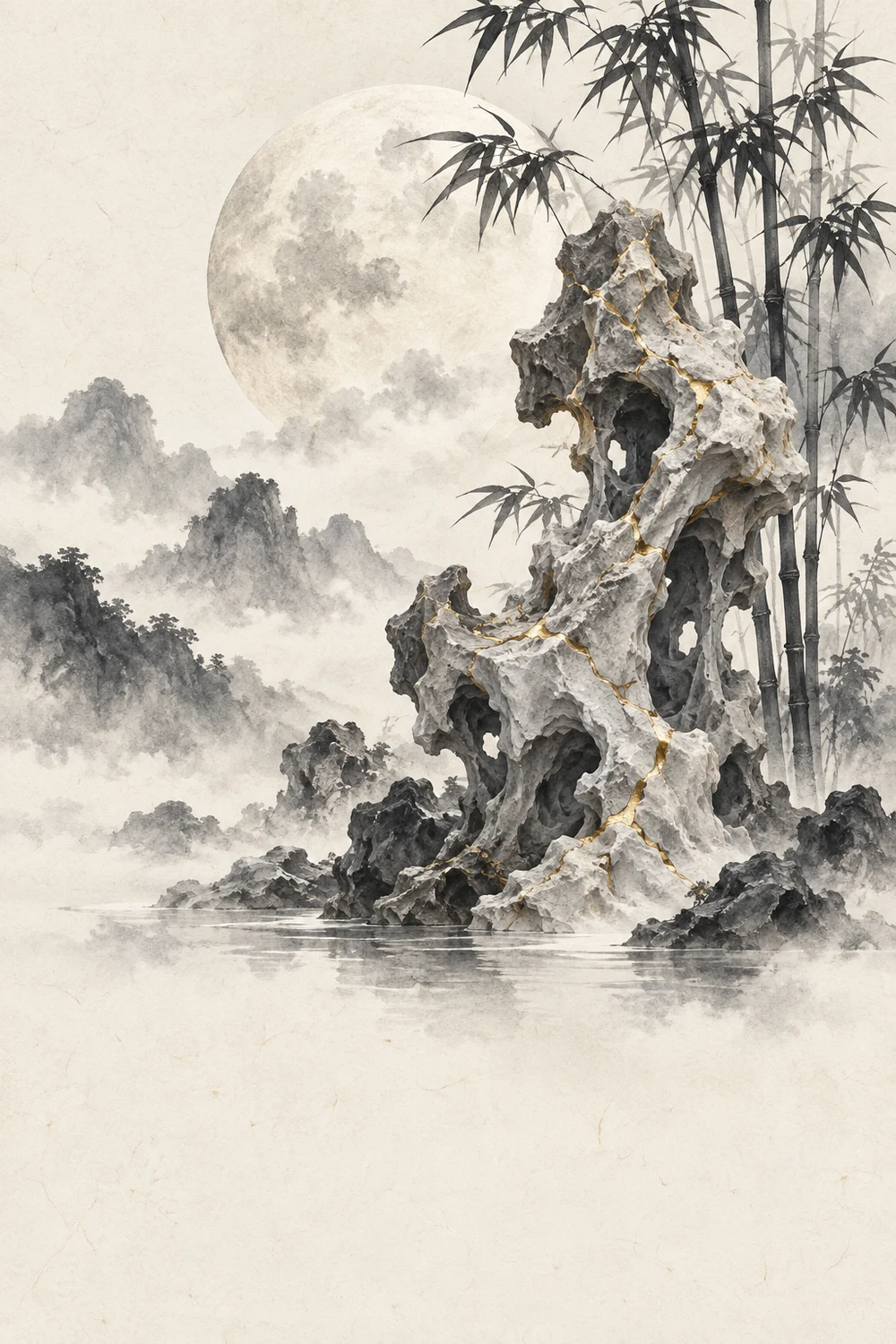
What the calendar measures
Walk outside in late August in Phoenix, Singapore, or Melbourne, and the phrase End of Heat might sound like a joke or a category error. Yet on the traditional Chinese solar calendar, 处暑 (End of Heat) is not a local weather forecast. It is one of twenty-four solar terms spaced at exact fifteen-degree intervals of solar longitude along the Sun’s apparent annual path.
Because those intervals follow astronomical position rather than lunar phases, End of Heat usually falls in late August, though the exact date and clock time shift slightly by year and time zone. The descriptive names grew out of historical agriculture and seasonal life in East Asia, which means the label will not match the thermometer across every latitude, climate, or hemisphere.
Midpoint, not month boundary
If you are looking at a BaZi birth chart, the twenty-four solar terms do structural work behind the scenes. Every second term marks the boundary of a new solar month, just as Li Chun marks the start of the BaZi year. End of Heat is one of the alternating mid-month markers that sit between those boundaries.
That distinction matters if your birthday falls in August. An August birth does not automatically place you in one fixed pillar, and End of Heat itself does not flip the month stem and branch. Our calculator uses the exact solar-term instants and local civil time to assign your four pillars, so you never have to guess from a wall calendar. If you have not seen how your month pillar lines up with the solar year, you can generate a free basic chart and check the seasonal context around your Day Master.
A ten-minute check on what is already done
The traditional image of receding heat makes a useful contemporary prompt, even if your local street is still sweltering or well into winter: let a finished task actually be finished. Consider a fictional designer, Maya, who keeps tweaking a slide deck three days after the client approved it. Using End of Heat as a small check-in, she closes the file, moves it into an archive folder, and writes down the time she stopped.
You can run a similar ten-minute experiment on the day 处暑 arrives. Step away from your screen, look at one concrete detail outside your window—the angle of late-afternoon shadow on a brick wall, dusty leaves on a street tree, or rain on a balcony rail—and note what your local season is actually doing. Then pick one completed obligation you are still mentally rehearsing and mark it closed on paper. Does naming a clear stopping point bring relief, or do you find that momentum works better for you when one project blurs straight into the next?
Find the story in your own chart.
Calculate your four pillars, meet your Day Master and take away a signature card.
Reveal my signatureCalendar reference: Hong Kong Observatory: the 24 solar terms. Calculation engine: lunar calendar documentation. Archetype labels, exercises and artwork are modern editorial interpretations. Read our method.