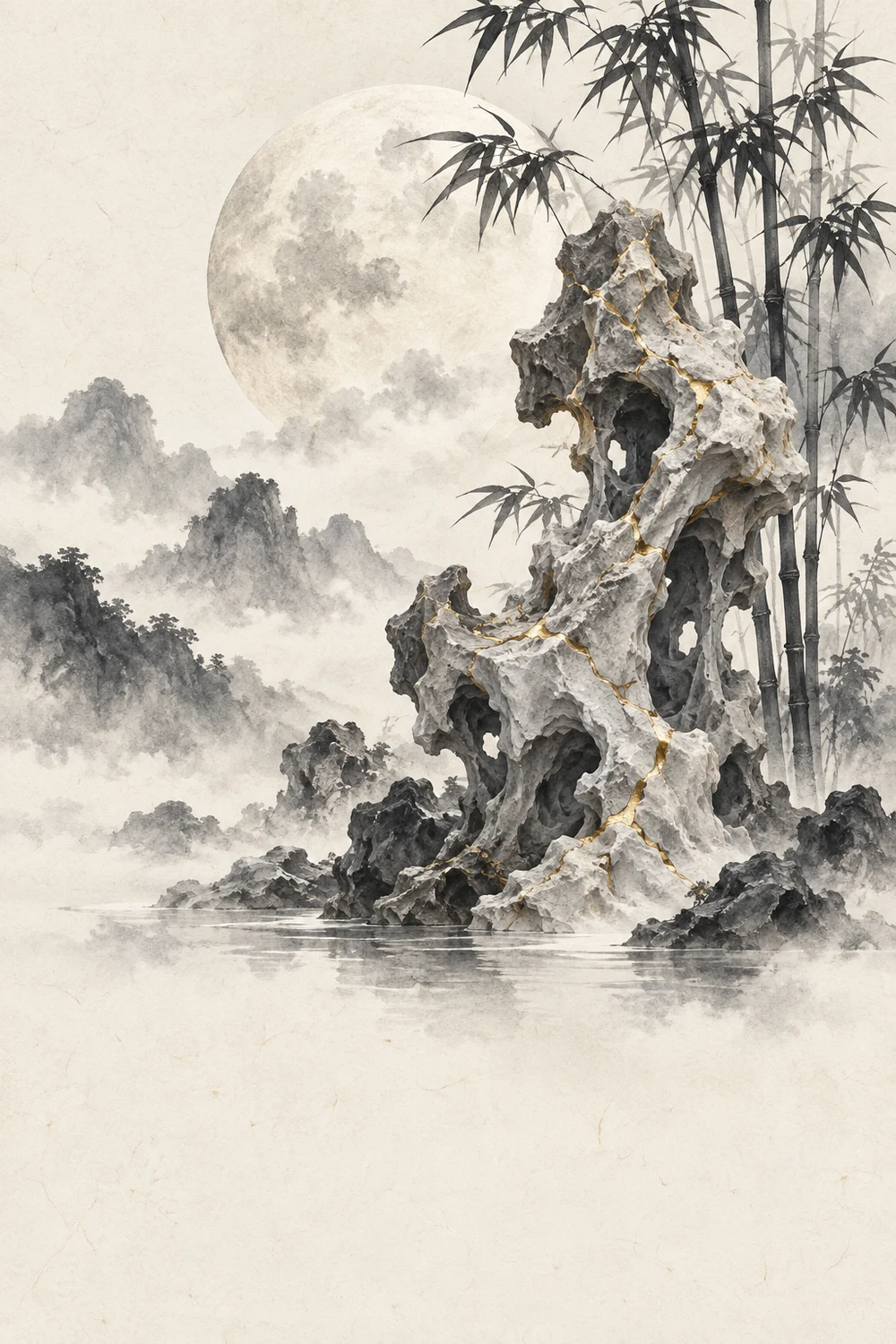
The weather outside versus the calendar on the wall
October in a northern textbook means wool coats and crisp leaves. October in Brisbane means jacaranda blossoms and rising humidity; in San Francisco, it often brings the clearest heat of the year. Even the traditional Chinese calendar, which divides the solar year into 24 segments spaced by 15 degrees of solar longitude, carries seasonal names shaped by historical northern landscapes rather than universal weather.
When you follow seasonal advice written for another latitude or hemisphere, your own surroundings can start to feel wrong. You might read essays about winter stillness while working retail during the busiest weeks of December, or see prompts for spring renewal while your street is locked in mud or monsoon rain. A personal season notebook sets borrowed expectations aside. It is a contemporary way to track what your specific street, apartment, and schedule are actually doing.
Borrowing the five phases as verbs
In BaZi, time is recorded through four pillars of Heavenly Stems and Earthly Branches, all animated by the five phases: Wood, Fire, Earth, Metal, and Water. When you generate a basic birth chart, you see how these phases appear at a single moment in time. In a daily notebook, however, they work best as verbs rather than categories.
Think of Wood as pushing outward or starting; Fire as gathering, warming, or peaking; Earth as stabilizing, digesting, or maintaining; Metal as paring back, sorting, or sharpening; and Water as pooling, resting, or waiting. These are observational prompts, not meteorological laws. A week of heavy rain does not automatically require a Water label if the storm knocks out a train line and forces frantic, improvised scheduling. Conversely, a bright July afternoon might push everyone indoors behind drawn blinds, creating a quiet, subterranean pause that feels much closer to Water than Fire.
One week of five-minute field notes
Open a blank page and pick a consistent anchor in your day, such as waiting for the kettle to boil or sitting down after your commute. For seven days, write down three physical observations and one behavioral note. Record the quality of the light, how the air feels on your skin rather than the number on a weather app, and one detail from the street or local plants. Then note when your focus peaked or when you wanted to step away from noise.
Suppose a fictional designer in a dense apartment block keeps a page during late August. Tuesday's entry reads: "7:30 a.m. Glare already bouncing off the opposite brick wall; air thick and still; pigeons huddled under the AC drip; answered three difficult emails before 9 a.m., then lost momentum by noon." If one of the five phases helps summarize the response, add it at the end: "Metal—decided to cancel two afternoon calls and clear the desk before heat set in."
When the metaphor does not fit
After a week or two, look back for local patterns. You might discover that wind changes your mood much faster than temperature does, or that an early sunset makes you cook more elaborate dinners. You might also find that the five-phase vocabulary feels clumsy or unnecessary on certain days. Does translating a humid Tuesday into "Earth" sharpen your attention, or does plain English do the job better?
If a phase name feels forced, leave it out. The notebook succeeds when it leads to a small, practical adjustment rather than a neat chart. At the end of the month, draw three columns at the bottom of the page: what is increasing, what is receding, and one experiment for next week. If afternoon glare is increasing and afternoon patience is receding, your experiment might be as minor as moving a reading chair two feet to the left or shifting grocery errands to 8 p.m. If you want to compare how the traditional calendar slices the year with what you just observed, read our guide to the 24 solar terms alongside your notes.
Find the story in your own chart.
Calculate your four pillars, meet your Day Master and take away a signature card.
Reveal my signatureCalendar reference: Hong Kong Observatory: the 24 solar terms. Calculation engine: lunar calendar documentation. Archetype labels, exercises and artwork are modern editorial interpretations. Read our method.