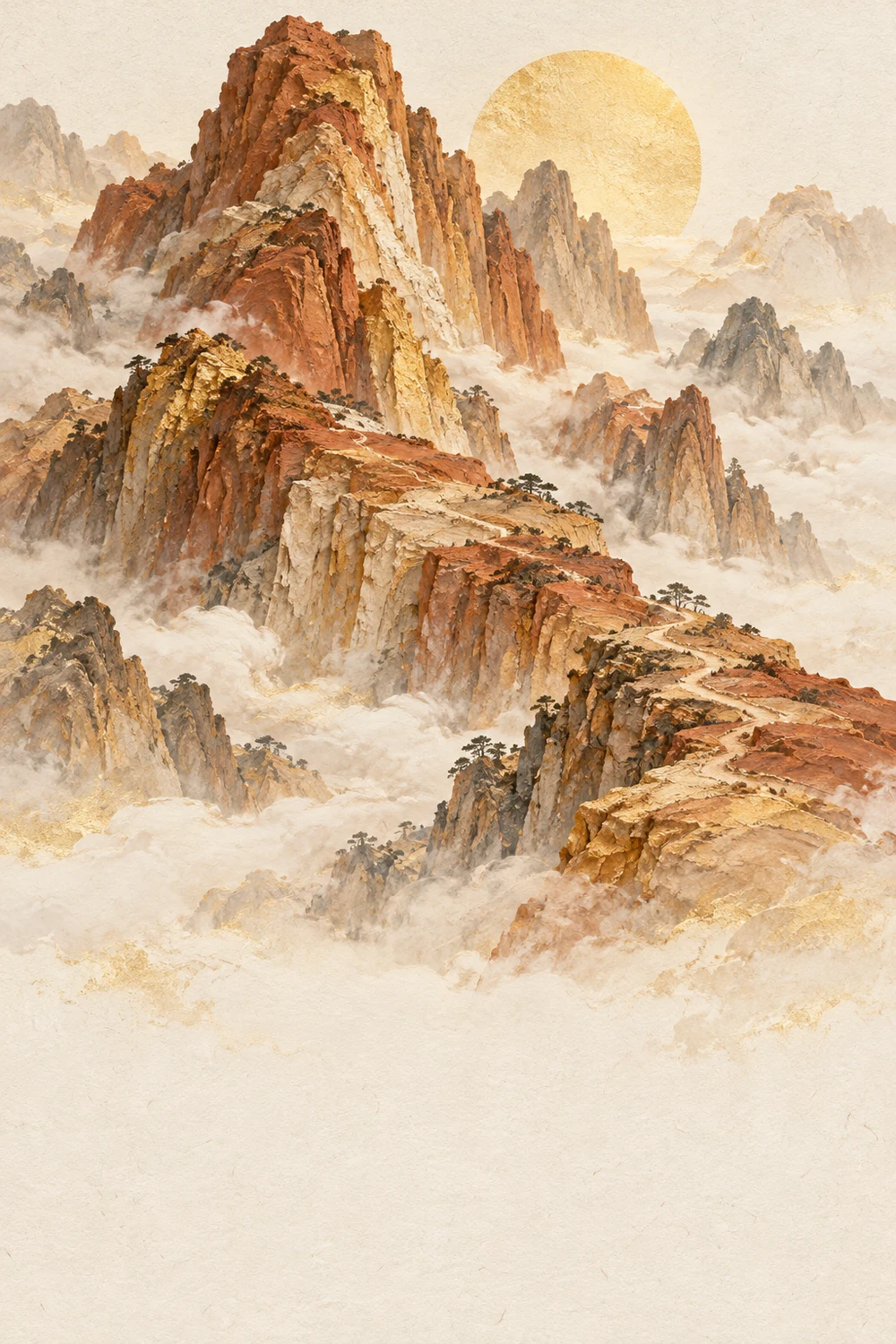
Soil that receives and transforms
A mountain commands the horizon, but a garden bed does its work up close. In Chinese BaZi, the ten Heavenly Stems divide the five phases into Yin and Yang expressions. While Yang Earth (戊 Wù) evokes high stone and broad terrain, Yin Earth (己 Jǐ) is traditionally pictured as cultivated soil: receptive, workable, and capable of turning rain, compost, and stray seeds into nourishment. The image focuses on tending conditions rather than forcing an outcome.
When the character 己 sits at the top of your day pillar, it serves as your Day Master, the primary reference point in an eight-character chart. We call this stem The Garden Keeper—our contemporary editorial name meant to give newcomers a clear visual handle without replacing the classical term. Notice where 己 sits in your four pillars: if it appears only in your year, month, or hour, it adds texture to your chart, but it is not your Day Master.
Tending versus managing
The Garden Keeper metaphor invites questions about resourcefulness, coordination, and quiet maintenance. Imagine a fictional coworker, Maya, who notices that a project team is stalling because two departments use different file structures. Instead of calling a dramatic meeting, she builds a shared index over lunch, and the bottleneck disappears. That is the constructive side of the cultivated-soil image: making growth easier for everyone in the room.
Yet soil that holds water too tightly turns to mud. The counterweight to care is over-management, and the quiet hazard of usefulness is mistaking being needed for being known. Does the image of patient caretaker actually fit you, or are you much happier initiating bold, messy first drafts and leaving the upkeep to someone else? A Day Master is a single lens, not a personality verdict. If you test this description against a real Tuesday, jot down one moment where you quietly smoothed a process and one where you refused to play host.
Try a smaller intervention
For a contemporary exercise this week, watch what happens in the five seconds after someone brings you a problem. Before offering a fix, reorganizing the plan, or taking the task onto your own plate, ask one plain question: what kind of support would actually help right now? Sometimes the answer is a sounding board; sometimes it is room to figure it out alone. Notice whether leaving that space feels relieving or uncomfortable.
How this stem fits the whole chart
If your free chart shows 己 Jǐ as your Day Master, do not be surprised if your five-phase bars show very little Earth overall. In our calculator, each of the eight visible characters counts for 12.5% of the bar display, without hidden stems, seasonal weighting, or favorable-element prescriptions. A Yin Earth Day Master can sit inside a chart dominated by Water, Wood, or Fire.
If you are comparing your public Day Master art card with a friend's chart from another site, check the clock first. Our system uses local civil time with a midnight day rollover, Li Chun for the year boundary, and solar terms for month boundaries, without true solar time correction. A birth near midnight can shift the day pillar entirely, turning a Garden Keeper into another stem.
Find the story in your own chart.
Calculate your four pillars, meet your Day Master and take away a signature card.
Reveal my signatureCalendar reference: Hong Kong Observatory: the 24 solar terms. Calculation engine: lunar calendar documentation. Archetype labels, exercises and artwork are modern editorial interpretations. Read our method.